
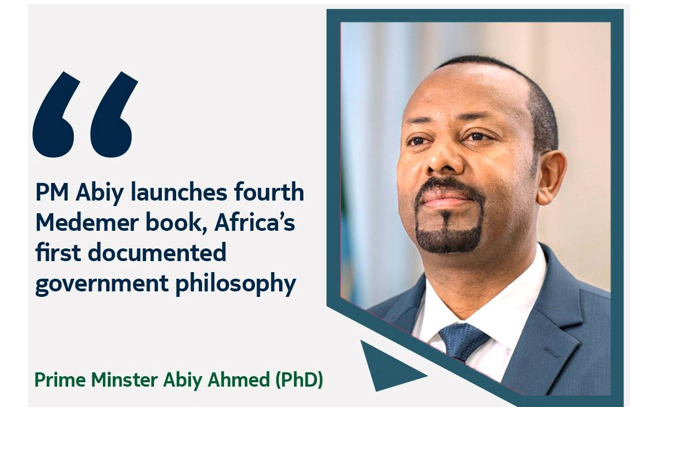
The Horn of Africa and the Red Sea region boast abundant resources and immense potential for prosperity. The key to unlocking this potential lies in cooperative and integrative efforts among the nations involved. Without a commitment to development through collaboration, these nations risk remaining vulnerable to external threats and challenges. At the forefront of this regional development strategy is MEDEMER, articulated by Dr. Abiy Ahmed, Ethiopia’s Prime Minister, a philosophy centred on partnership, mutual benefit, fostering growth for a stable and prosperous region and evidenced through Ethiopia’s own developmental trajectory.

Amidst the current geopolitical challenges and unpredictable circumstances, regional integration and cooperation remain important. Transitional and middle powers play critical roles while asserting their national interests within the region and the Red Sea area. Meanwhile, major powers significantly influence the region. Therefore, the region becomes a focal point for competition and collaboration among both transitional and major powers. The solution to fostering robust regional cooperation lies in the synergetic approach embodied by the MEDEMER philosophy.
Ethiopia has seen remarkable economic progress over the past seven years, achieving an average growth rate of over 8%. This growth not only underscores Ethiopia’s commitment to sustainable development but also has positive implications for its neighbours, fostering regional integration and collective advancement. Ethiopia is the third economy in Sub-Sahara Africa after Nigeria and South Africa benefits the whole of East Africa not only horn of Africa. This fast economy of Ethiopia to sustain and efficiently connect diversified port access for Ethiopia is inevitable.
Several mega projects exemplify how Ethiopia’s integration efforts can work effectively. The completion of the Grand Ethiopian Renaissance Dam (GERD) stands as a model of regional clean energy infrastructure connectivity. Ethiopia is positioned to supply some of the cheapest electricity in Africa to neighbouring countries such as Kenya, Djibouti, and Tanzania, and there is potential to extend this service to Somalia. This clean energy expansion also plays a crucial role in mitigating climate change-induced challenges in the region.
Another noteworthy initiative is the Green Legacy Initiative (#GLI), championed by PM Abiy Ahmed, which aims to protect the environment. It is also source of income, food, employment opportunities and so on. Over the last seven years, Ethiopia has planted 48 billion trees, demonstrating its commitment to environmental stewardship. Ethiopia remains dedicated to sharing its expertise in sustainable practices with Somalia and its regions including Puntland state of Somalia as well as the region in total, collaborating with development partners and investors to achieve energy connectivity and sustainable development.
The electric railway connecting Ethiopia and Djibouti serves as a monumental example of regional integration, facilitating smoother movement of goods and people. Moreover, cross-border road transportation between Ethiopia and Kenya has significantly improved the mobility of trade and individuals.
Addis Ababa, serving as the political capital and a hub for diplomacy in Africa, continues to set a shining example in urban development. As noted by Honorable Junet Mohammed, a Member of Parliament in Kenya, Ethiopia stands as a benchmark for urban development that other African cities can emulate, rather than looking to Europe or beyond. Ethiopia’s role as a host for international summits has been solidified, most notably by being selected to host COP-32 in 2028 in Addis Ababa, marking a significant milestone for the region and the continent.
Ethiopia’s long-established commitment to peace and stability, coupled with its support for neighbouring countries, underscores its crucial role in fostering security and cooperation within the Intergovernmental Authority on Development (IGAD) region. Major investment projects, worth approximately $30 billion, as part of Ethiopia’s economic reform and transformation agenda, have generated positive momentum for neighbouring countries. Initiatives like surplus wheat production which has been exported to Kenya, the Gode-Gas project phases I and II, the fertilizer industry, and the $12 billion Bishoftu International Airport project of 110 Million passengers will rank amongst the 10 largest airports in the world and other are transforming the economic landscape of the Horn of Africa and bolstering political stability.
Furthermore, advancements in artificial intelligence will serve as a crucial infrastructure for regional tech-based connectivity. Ethiopia is set to launch a world-class Artificial Intelligence (AI) university within in one year, aimed to attract students from across Africa.
The DESSU Corridor Management Authority plays a pivotal role in facilitating effective transportation and trade among Djibouti, Ethiopia, South Sudan, and Uganda, further strengthening regional cooperation and integration.
Ethiopia also shares a long border with Somalia, where cross-border trade, people-to-people relationships, joint security operations, and service delivery can thrive. To sight as an example Puntland-Ethiopia cooperation, in the philosophy of MEDEMER, is not limited to trade alone, but also touches on education, trade, air transport, security and further cooperation, which shows the development direction of strengthening connectivity and cooperation.
Ethiopia’s remarkable development today is a significant factor for the entire Horn of Africa, including Puntland, which is geographically and strategically located. The expansion of infrastructures in both side increases the value of connectivity between Ethiopia and Puntland. Also Puntland has a coastline of 1,650 km² stretching along the Gulf of Aden and the Indian Ocean. The natural resources and the ports of Bosaso, Garacad and many other ports give Puntland the potential to become an important trading and strategic hub.
In conclusion, Ethiopia’s vision of connecting with its neighbouring countries is being actualized through impactful mega projects that are ushering in soci-economic development across the region and beyond. The MEDEMER philosophy not only embodies a progressive approach to regional integration but also lays a foundation for a stable and prosperous future for the Horn of Africa. By working together, Horn nations can harness their potential and face common challenges, ensuring a brighter tomorrow for all their citizens.
COMMENTS